
Bathroom flooring fails more often than most people expect, and it's rarely because they picked the wrong product. It's usually because of how it was installed and what was going on underneath it. This guide covers what waterproof actually means in a flooring context, which products are genuinely suited to wet areas, and what causes even good materials to fail.
What "Waterproof" Actually Means for Bathroom Flooring
When a flooring product is marketed as waterproof, that refers to the material itself. The plank or tile won't absorb water or swell when it gets wet. That's an important property in a bathroom, but it doesn't mean the floor as a whole is protected.
Water in a bathroom doesn't just sit on the surface. It finds its way into seams, grout lines, gaps around the toilet base, and under transitions. If the installation doesn't account for that, or if the subfloor underneath isn't properly prepared, the floor can fail even when the product itself is rated for wet areas.
Waterproof flooring is a starting point. A complete installation is what actually keeps the floor performing.
Bathroom Flooring Options That Actually Hold Up
Porcelain and Ceramic Tile
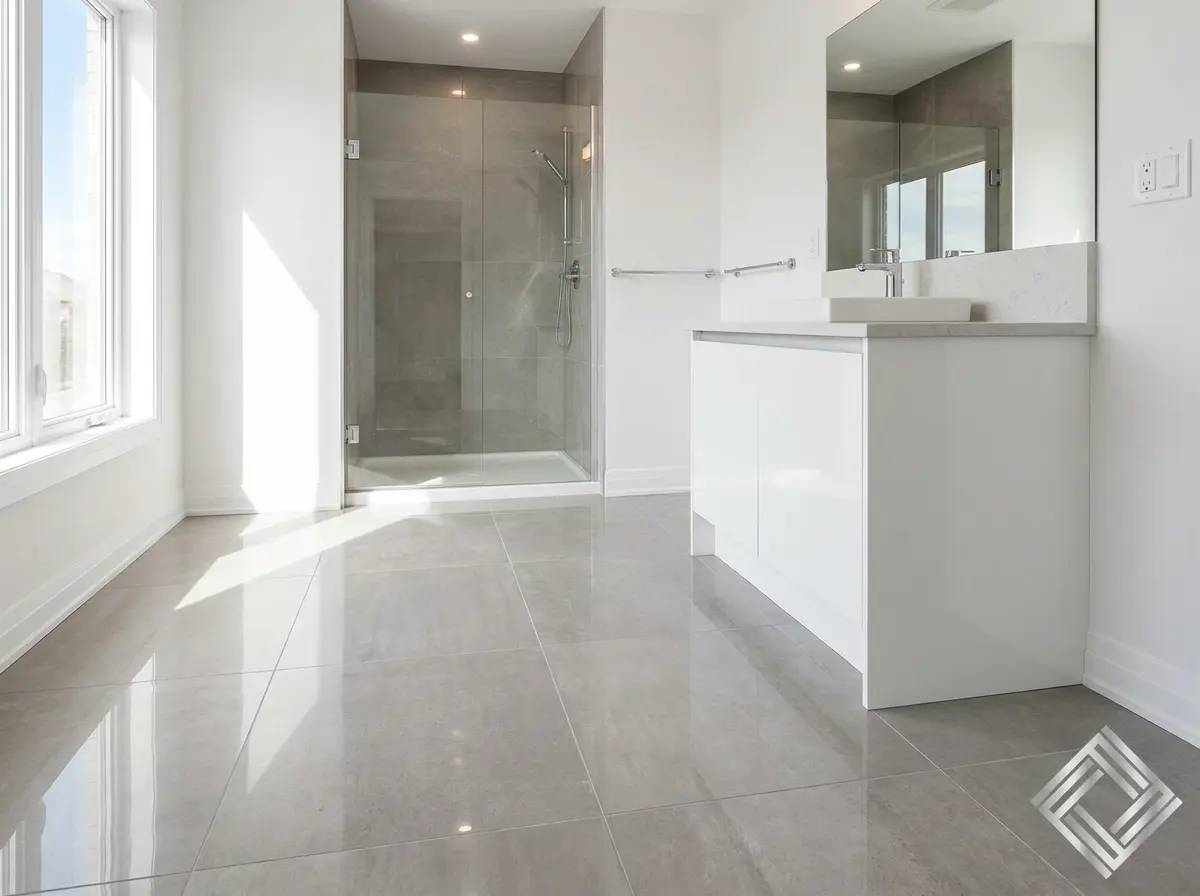
Tile is the most proven bathroom flooring material. Porcelain in particular is dense, extremely low-absorption, and built for wet environments. When it's properly set on a solid, flat substrate with quality grout and appropriate sealant, it can last the life of the building.
The failure points with tile aren't the tile itself. They're the substrate, the grout, and the setting. Tile laid over a flexing subfloor will crack. Grout left unsealed in a shower or around a tub allows water penetration. Getting tile right takes preparation and proper technique.
Luxury Vinyl Plank (SPC Core)
SPC-core LVP is a practical choice for bathroom floors. The rigid stone plastic composite core doesn't absorb water, it's warmer and more comfortable underfoot than tile, and it installs quickly. It handles the typical moisture exposure of a bathroom floor well.
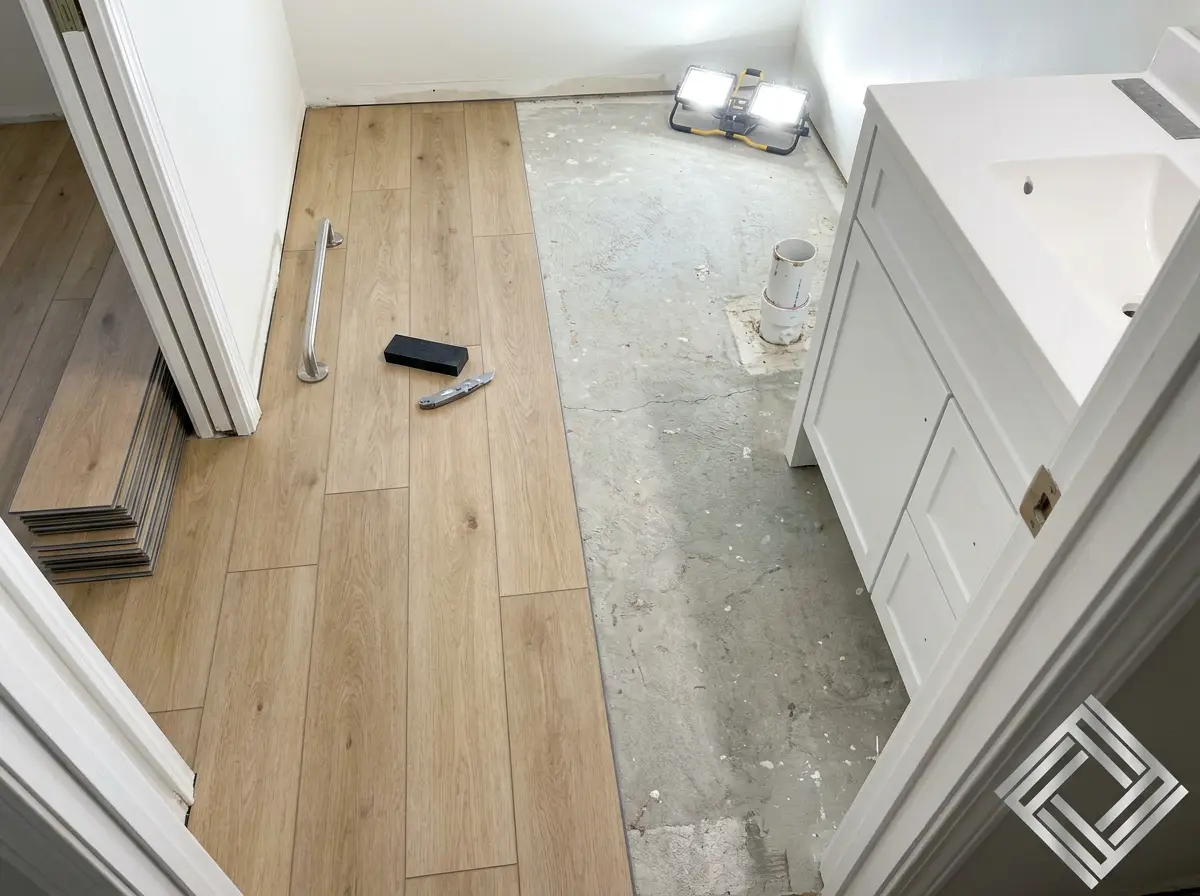
The important distinction is between the floor being waterproof and the installation being watertight. LVP seams are not sealed. Water that gets under the floor through gaps at walls or transitions can sit on the subfloor beneath it. The subfloor still needs to be dry and properly prepared, and the perimeter installation needs to be done carefully.
Flooring That Doesn't Belong in a Bathroom
A few products get installed in bathrooms regularly and cause problems just as regularly.
- Solid hardwood: Not suitable for bathrooms. The moisture from steam, splashing, and humidity variations will cause movement, cupping, and eventual failure.
- Engineered hardwood: More dimensionally stable than solid, but still not a good fit for bathrooms. The real wood veneer is vulnerable to sustained moisture exposure.
- Laminate: Laminate has a wood composite core that swells when wet. Even products marketed as water-resistant aren't appropriate for a full bathroom environment.
- Glue-down LVP over questionable subfloors: If the subfloor has existing moisture issues or isn't structurally sound, adhesive won't compensate for it.
Why the Subfloor Is the Variable That Matters Most
Bathroom subfloors take more abuse than any other floor in the house. Leaks from toilets, slow drips under vanities, water from showers and tubs — over time, subfloors in bathrooms can soften, flex, or develop moisture problems that aren't visible until the floor is pulled up.
Before any bathroom floor gets installed, the subfloor needs to be assessed. Is it solid? Is it flat? Are there any soft spots indicating water damage? Is there existing moisture that needs to be addressed before new flooring goes down?
Skipping that assessment to save time is one of the most common reasons bathroom flooring fails within a few years of installation.
Worth knowing
A soft spot in the subfloor near a toilet or under a vanity is almost always a sign of a past or ongoing leak. Installing new flooring over it without fixing the source and replacing the damaged subfloor material is a short-term fix that creates a bigger problem later.
What Causes Bathroom Flooring to Fail
Most bathroom flooring failures come down to a short list of installation and prep issues:
- Water penetrating at unsealed grout lines or around the toilet base
- Inadequate or missing waterproofing membrane in shower and wet zones
- Tile cracking due to a flexing or inadequately supported subfloor
- LVP buckling from water that got under the floor through gaps at walls or transitions
- Existing subfloor damage that wasn't identified or addressed before installation
- Wrong product choice for the moisture level of the space
Questions to Ask Before Installing Bathroom Flooring
Before any bathroom floor goes in, these are worth getting answers to:
- 1Has the subfloor been assessed for soft spots, moisture damage, or flex?
- 2Is the subfloor flat enough for the product being installed?
- 3For tile: is the substrate rated for wet areas and properly supported?
- 4For LVP: how will the perimeter and transitions be handled to limit water infiltration?
- 5Is there an existing leak source that needs to be fixed before the floor goes in?
- 6What's the grout or seam sealing plan, and how often does it need maintenance?
The Bottom Line on Waterproof Bathroom Flooring
Porcelain tile and quality SPC-core LVP are the two products that reliably hold up in bathrooms when they're installed correctly. Tile is the longer-term, higher-performance option. LVP is practical, comfortable, and well suited to the space when the installation is done right.
What makes the difference in both cases isn't the product on the label. It's the subfloor condition, the preparation, and how carefully the installation is executed. A waterproof floor that's poorly installed in a wet area isn't going to perform like one that's been done properly.
If you're replacing a bathroom floor, take the time to look at what's underneath before committing to a product. That assessment is what determines whether the new floor is going to last.